

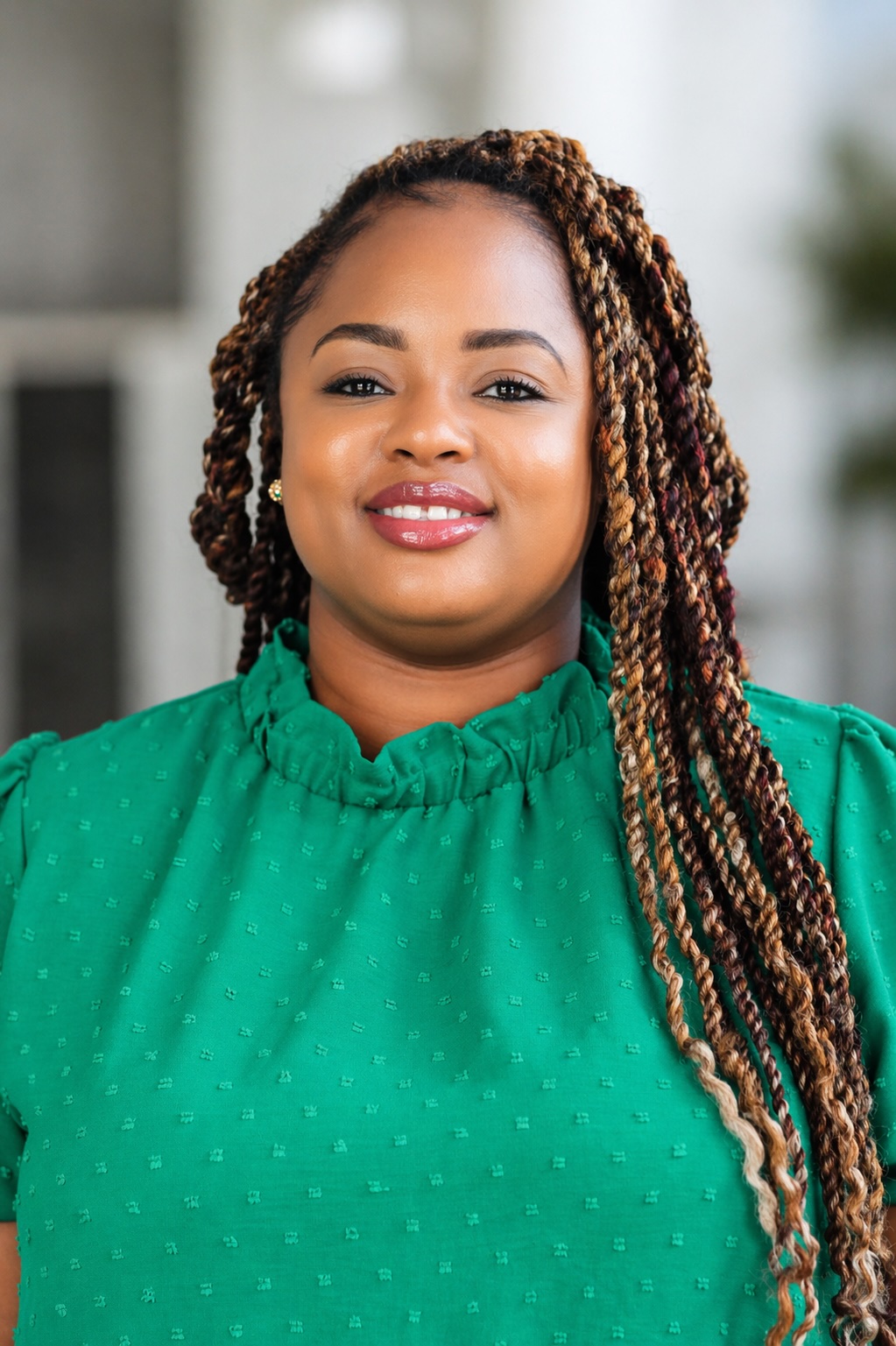
Detrice L. Roberts, PhD
Biography
Detrice L. Roberts, Ph.D., is a historian, digital humanities scholar, educator, and cultural preservationist whose interdisciplinary work explores the intersections of African American history, cultural memory, higher education, and digital innovation. Her scholarship centers on recovering, preserving, and interpreting historically marginalized narratives, particularly those of African American women, Black communities, and historically Black colleges and universities (HBCUs). Through community-engaged research, digital storytelling, and archival preservation, Roberts examines how historical knowledge is produced, sustained, and made accessible across generations.
Roberts serves as a Professor of History at Jackson State University and an adjunct faculty member at Tougaloo College, where she integrates historical inquiry, digital humanities methodologies, and culturally responsive pedagogy into her teaching. She earned her Doctor of Philosophy in Urban Higher Education from Jackson State University, where her dissertation, Faculty Perceptions of Curriculum Reform in HBCUs through the Lens of Fiedler’s Contingency Model, examined the relationships among academic leadership, organizational structures, and faculty experiences in curriculum reform. She also holds a Master of Arts in History from Jackson State University and a Bachelor of Arts in History from Tougaloo College.
As a coordinator of Thee Africana Digital Humanities Lab (ADHL) at Jackson State University, Roberts advances interdisciplinary initiatives that bridge traditional historical scholarship with emerging digital technologies. Her work includes archival digitization, three-dimensional cultural heritage documentation, digital exhibitions, oral history, and student-centered research fellowships. Through projects such as the digitization of Jackson State University’s African Art Collection, she works to expand access to cultural heritage while preparing students to engage critically with the ethical, methodological, and interpretive dimensions of digital scholarship.
Roberts’s research also extends beyond institutional archives into community-centered preservation and public history. Through her work with Scott Ford Houses, Inc., a historic landmark and nonprofit organization dedicated to interpreting the legacies of African American midwives and community life in Jackson, Mississippi, she investigates the histories of Black women’s labor, maternal care, intergenerational knowledge, and community resilience. Her research considers how digital archives, oral histories, material culture, and collaborative storytelling can recover histories frequently excluded from traditional historical narratives. Her scholarly contributions reflect her interdisciplinary commitment to digital humanities, culturally responsive pedagogy, institutional transformation, and the preservation of African American historical experiences. She is a coauthor of From Midwife Bags to Metadata: Digitizing the Birth and Memory of Black Women’s Knowledge in the Mississippi South, accepted for publication in The Southern Quarterly digital humanities special issue. Her contributions to higher education scholarship also include the chapters Combating the Culture of Dissociation Amongst Students Today and Closing the Gap through Coaching, associated with the HBCU Faculty Development Network’s forthcoming edited volume, tentatively titled Leading the Challenge: Navigating Complex Higher Education Environments with Grace & Grit, coedited by Dr. Donald Collins and Dr. Laurette Foster. Roberts is also the author of the forthcoming manuscript Teaching Through Generational Traumas: Adaptive Practices to Combat Dissociation While Addressing the Impacts of Respectability, which explores the historical and generational influences shaping contemporary student experiences and offers adaptive, culturally grounded approaches to teaching and learning.
Beyond her academic appointments, Roberts has contributed to initiatives in historic preservation, youth development, civic engagement, and cultural advocacy through organizations including Scott Ford Houses, Inc., upGrade Mississippi, Breast Cancer Advocacy, Southern Black Girls & Women Consortium, and Mississippi M.O.V.E. Her work reflects a commitment to building sustainable partnerships among universities and local communities.
At the heart of Roberts’s scholarship is a commitment to making history accessible, participatory, and meaningful. She approaches digital humanities not simply as the application of technology to historical research, but as a transformative practice for preserving cultural memory, expanding archival representation, and creating new opportunities for communities to engage with their own histories. Her work seeks to bridge the academy and the public, ensuring that the stories, experiences, and intellectual contributions of historically marginalized communities remain visible and accessible to future generations.