

Professor
Jackson State University
Department of Chemistry and Biochemistry
1400 J. R. Lynch Street
P.O. Box 17910
Jackson, MS 39217-0510
Physical location:
John A. Peoples Science Building
Office: room #506
Contact:
E-mail: ming-ju.huang@jsums.edu
Tel: (601) 979-3492
Fax: (601) 979-3674
Huang Research Group
Teaching
Practicum in College Chemistry Teaching: Laboratory CHEM 750
Physical Chemistry CHEM 341 and CHEM 342
General Chemistry Lab. CHML 141 and CHML 142
Research Interests: Computer-Aided Drug Design, QSAR, Molecular Similarity
Our research focuses on the development of methods for computer-aided drug design, the application of quantum chemical methods to molecular structure, receptor-ligand binding activity, and QSAR studies with traditional regression and neural network approaches based on calculated molecular properties from quantum mechanical methods. Our ultimate goal for computer-aided drug design is to provide some useful drug candidates for synthetic chemists before they start their synthesis.
Selected publications (Click here For Full list of Publications)
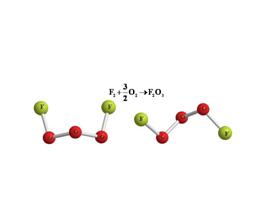
Ming-Ju Huang and John D. Watts, “Theoretical Characterization of the F2O3 molecule by coupled-cluster methods”, J. Phys. Chem. A. (2010), in press.
Meng-Sheng Liao, Ming-Ju Huang, and John D. Watts, “Iron Porphyrins with Different Imidazole Ligands. A Theoretical Comparative Study”, J. Phys. Chem. A. 2010, in press. (DOI: 10.1021/jp1052216).
M. A. Saeed, Frank R. Fronczek, Ming-Ju Huang, and Md. Alamgir Hossain, “Unusual Bridging of Three Nitrates with Two Bridgehead Protons in an Octaprotonated Azacryptand”, Chem. Commun. 46, 404-406 (2010).
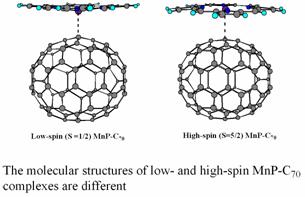
Meng-Sheng Liao, John D. Watts, and Ming-Ju Huang, “Supramolecular Interactions of Fullerenes with (Cl)Fe- and Mn Porphyrins. A Theoretical Study”, Phys. Chem. Chem. Phys., 11, 6072-6081 (2009).
Meng-Sheng Liao, John D. Watts, and Ming-Ju Huang, “Assessment of Dispersion Corrections in DFT Calculations on C60-Porphyrin Complexes”, Phys. Chem. Chem. Phys., 11, 4365-4374 (2009).
John D. Watts, David J. Watts, and Ming-Ju Huang, “Theoretical Study of the Tautomerism, Structures, and Vibrational Frequencies of the Phosphaalkenes XP=C(CH3)2 (X = H, F, Cl, Br, OH, ArF (ArF = 2,6-(CF3)2C6H3))”, J. Phys. Chem. A, 113(10), 1886-1891 (2009).
Ming-Ju Huang, Zhe Quan, and Yi-Ming Liu, “Computational Modeling of Inclusion Complexes of b-Cyclodextrin with enantiomers of Salsolinol, N-Methyl-Salsolinol, and 1-Benzyl-Tetrahydroisoquinoline”, Int. J. Quantum Chem, 109, 81-90 (2009).
Ming-Ju Huang, “QSAR Study of the Structural and Conformational Requirements of Anandamide for Binding to the CB1 Cannabinoid Receptor”, Mol. Phys., 106, 1847-1852 (2008).
Meng-Sheng Liao, John D. Watts, and Ming-Ju Huang, “Assessment of Some Recently Developed Density Functionals for Calculations on Iron Porphyrins”, Journal of Theoretical and Computational Chemistry, 7, 615-628 (2008).
Meng-Sheng Liao, John D. Watts, Sergiu M. Gorun, Steve Scheiner, and Ming-Ju Huang “Structure and Properties of Perfluoroalkylated Phthalocyanines. A Theoretical Study”, Journal of Theoretical and Computational Chemistry, 7, 541-563 (2008).
Brian Napolion, Ming-Ju Huang, and John D. Watts, “Coupled-Cluster Study of Isomers of H2SO2”, J. Phys. Chem. A 112, 4158-4164 (2008).
Meng-Sheng Liao, P. Bonifassi, Jerzy Leszczynski, and Ming-Ju Huang, “Electronic Structure, Absorption Spectra, and Hyperpolarizabilities of Some Novel Push-Pull Zinc Porphyrins. A DFT/TDDFT Study”, Mol. Phys. 106, 147-160 (2008).