
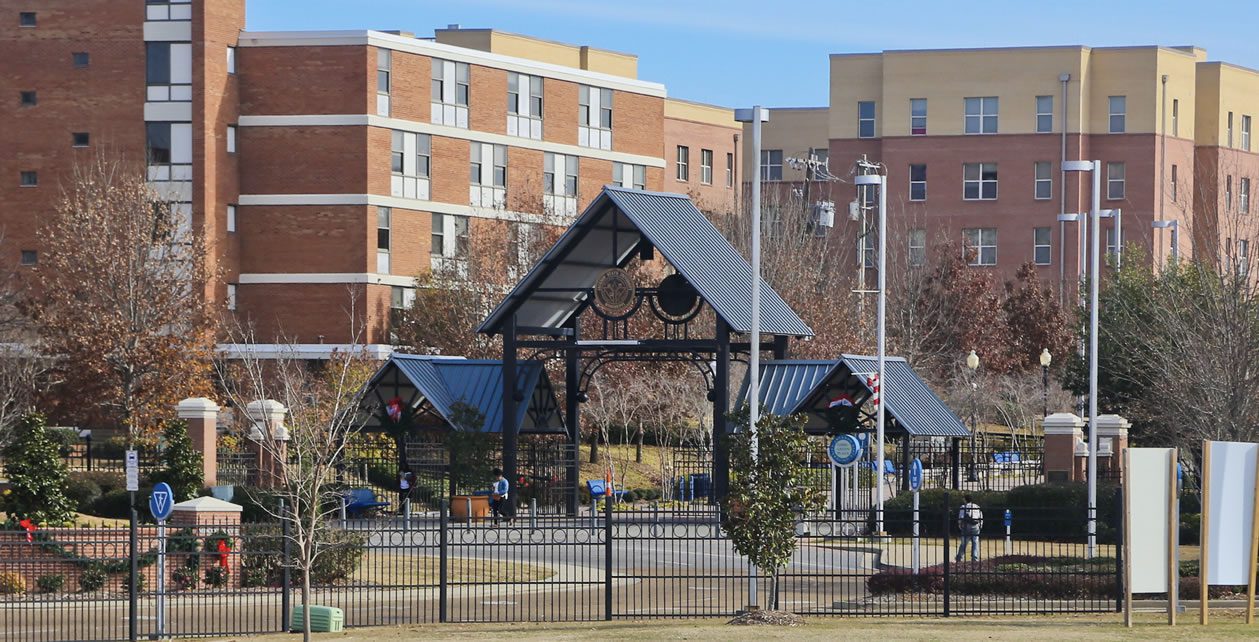
Residential Code of Conduct

Residential Code of Conduct & Community Standards

Living on campus at Jackson State University is more than simply having a place to live—it is an opportunity to engage in a vibrant community that supports academic achievement, personal growth, leadership development, and student success.

Housing & Residence Life is committed to providing a residential experience that is safe, welcoming, inclusive, and conducive to learning. Every resident plays an important role in creating an environment built upon respect, responsibility, integrity, and community.

By choosing to live on campus, residents agree to uphold the standards outlined in the Residential Code of Conduct, Housing Agreement, and Jackson State University Student Handbook.

Housing & Residence Life Conduct

The Department of Housing & Residence Life at Jackson State University administers the Residential Conduct Process to promote a safe, respectful, and inclusive living-learning environment. The conduct process is designed to educate students, encourage personal accountability, and uphold the standards outlined in the Housing Agreement, Residential Code of Conduct, and the Jackson State University Student Handbook.

Through a fair, consistent, and educational conduct process, Housing & Residence Life seeks to support student success while maintaining a residential community that fosters respect, responsibility, and integrity.

Student Learning Outcomes

After participating in the Residential Conduct Process, students will be able to:

  • Understand their rights and responsibilities throughout the Residential Conduct Process.
  • Reflect on how personal values, choices, and behaviors influence decision-making.
  • Recognize the impact of their actions on roommates, neighbors, and the broader residential community.
  • Identify strategies for making responsible decisions and contributing positively to the campus living environment.
  • Demonstrate an increased understanding of the Housing & Residence Life Residential Code of Conduct and University expectations.

Goals of the Residential Conduct Process

Housing & Residence Life Hearing Officers strive to:

  • Promote a safe, respectful, and inclusive residential community.
  • Encourage ethical decision-making, personal responsibility, and accountability.
  • Utilize educational sanctions and interventions that support student learning, reflection, and personal growth.
  • Foster respect for community standards and University policies.
  • Help students develop the skills necessary to be responsible community members and engaged citizens.

Purpose of the Residential Conduct System

The Housing & Residence Life Residential Conduct System exists to protect the rights of all residents while promoting accountability, fairness, and student development. The process provides students with procedural fairness when allegations of violations of housing policies are reported and emphasizes education as the primary outcome whenever appropriate.

The Residential Conduct Process is administered by the Department of Housing & Residence Life and is separate from the University’s student conduct process. However, Housing & Residence Life collaborates with the Office of Student Affairs and other appropriate University offices to ensure consistency, uphold University policies, and promote the safety and well-being of the Jackson State University community.

Reporting an Incident

Any student, faculty member, staff member, resident, or guest may report an incident or alleged violation of the Housing Agreement, Residential Code of Conduct, or University policies to the Department of Housing & Residence Life. Reports are reviewed by Housing & Residence Life professional staff, who will determine the appropriate course of action, which may include educational interventions, administrative action, or the initiation of the Residential Conduct Process.

Reports involving alleged violations that impact the safety, security, or well-being of the residential community may result in residential conduct charges. Students who are alleged to have violated housing policies will be provided with notice of the alleged violation, an opportunity to review available information consistent with University procedures, and an opportunity to respond through the Residential Conduct Process.

Housing & Residence Life cannot guarantee confidentiality or anonymity for individuals submitting reports. Information received will be handled as privately as possible while allowing the University to appropriately investigate and resolve reported concerns.

The Department of Housing & Residence Life takes all reports seriously. Knowingly submitting false, misleading, or fraudulent information may result in disciplinary action through the residential or University conduct process and may be referred to the appropriate authorities when applicable.

Incidents involving emergencies, criminal activity, threats to personal safety, medical emergencies, or other immediate concerns should be reported immediately to the Jackson State University Police Department by calling 911 (on campus, if applicable) or the University’s designated emergency number.

Jackson State University encourages students to report concerns that affect the health, safety, and welfare of the residential community. Students who seek assistance for themselves or others during emergencies may be considered for educational and supportive responses consistent with applicable University policies.

Communication and Correspondence

The Department of Housing & Residence Life communicates with students regarding residential conduct matters primarily through their official Jackson State University email account. Students are responsible for regularly monitoring their University email and responding to communications in a timely manner.

Notices regarding alleged policy violations, meeting dates and times, hearing information, outcomes, and other conduct-related correspondence will be sent electronically. Students are responsible for reviewing all correspondence and complying with any deadlines or instructions provided. Failure to read or respond to University email does not exempt a student from the Residential Conduct Process or the outcomes of a conduct decision.

Residential conduct meetings are conducted by professional Housing & Residence Life staff members designated as Hearing Officers. Meetings are typically held in Housing & Residence Life offices or another designated University location. Meeting details will be communicated through the official conduct notice.

Hearing Officers are trained professional staff members within the Department of Housing & Residence Life who are responsible for reviewing alleged policy violations, conducting meetings in a fair and impartial manner, and determining responsibility and appropriate educational outcomes when warranted.

The Residential Conduct Process is governed by the Housing Agreement, the Housing & Residence Life Residential Code of Conduct, the Jackson State University Student Handbook, and other applicable University policies and procedures. Students residing in University housing are expected to be familiar with and comply with all applicable policies regardless of whether they have reviewed these documents.

Procedural Due Process

The Department of Housing & Residence Life is committed to providing students with a fair, impartial, and educational Residential Conduct Process. Students alleged to have violated housing policies will be afforded procedural due process consistent with the Housing Agreement, the Housing & Residence Life Residential Code of Conduct, and applicable University policies.

Notice of Alleged Violation

Students alleged to have violated a housing policy will receive written notification through their official Jackson State University email account. The notice will include:

  • The alleged policy violation(s);
  • A summary of the reported incident, when appropriate;
  • The date, time, and location (or virtual meeting information) for the conduct meeting or administrative hearing; and
  • Information regarding the student’s rights and responsibilities throughout the Residential Conduct Process.

Whenever reasonably possible, students will receive at least forty-eight (48) hours’ notice before a scheduled conduct meeting or hearing.

During the conduct meeting, students will have the opportunity to:

  • Review the alleged policy violation(s);
  • Discuss the reported incident;
  • Respond to the allegations;
  • Present relevant information related to the incident; and
  • Ask questions regarding the Residential Conduct Process.

Housing & Residence Life Hearing Officers will determine responsibility based on the preponderance of the evidence, considering all relevant information available.

If a student fails to attend a scheduled conduct meeting or hearing after receiving proper notice, the Hearing Officer may proceed in the student’s absence and render a decision based upon the information available. Failure to participate does not waive the University’s authority to resolve the matter.

If additional alleged policy violations are identified after notice has been issued, Housing & Residence Life may provide an amended or supplemental notice, and the student will be given a reasonable opportunity to respond before a decision is made regarding the additional allegations.

Hearing Outcome

Following the conclusion of the conduct process, students will receive written notification of the Hearing Officer’s decision through their official Jackson State University email account. The outcome letter will include:

  • The finding(s) of responsibility, if applicable;
  • Any assigned educational or disciplinary sanctions; and
  • Information regarding the appeal process, when applicable.

Students wishing to appeal a conduct decision must submit a written appeal in accordance with the procedures and deadlines established by Housing & Residence Life.

Advisor

Students participating in the Residential Conduct Process may be accompanied by one (1) advisor of their choice, including a parent, guardian, faculty member, staff member, fellow student, or attorney.

The advisor’s role is limited to providing support and consultation to the student. Advisors may not conduct the hearing, present the student’s case, question participants, or otherwise disrupt the proceedings.

Students who intend to bring an advisor should notify the assigned Hearing Officer prior to the scheduled meeting. If the advisor is an attorney, Housing & Residence Life should be notified in advance to allow the University to make appropriate arrangements.

Hearings will not ordinarily be postponed due to the unavailability of an advisor. Students remain responsible for presenting their own information and responding directly to questions during the conduct meeting or hearing. Hearing Officers may remove an advisor whose conduct disrupts or interferes with the orderly administration of the Residential Conduct Process.

Student Rights and Initial Meeting

The Department of Housing & Residence Life is committed to administering a Residential Conduct Process that is fair, educational, and respectful of student rights. Students participating in the Residential Conduct Process are entitled to the following rights:

  • To receive written notice of the alleged housing policy violation(s).
  • To be treated with dignity, fairness, and respect throughout the conduct process.
  • To ask questions regarding the Residential Conduct Process and the alleged policy violation(s).
  • To review the information available to the Hearing Officer that is relevant to the alleged violation, consistent with applicable University policies and federal law.
  • To respond to the allegations and present relevant information on their own behalf.
  • To be accompanied by one (1) advisor of their choice in accordance with Housing & Residence Life procedures.
  • To have their conduct records maintained in accordance with applicable privacy laws and University policies.
  • To receive written notification of the outcome of the Residential Conduct Process.
  • To appeal a decision in accordance with the procedures established by Housing & Residence Life.

Educational Purpose

The Residential Conduct Process is intended to be educational rather than solely punitive. Housing & Residence Life seeks to help students understand how their decisions affect themselves, their roommates, neighbors, and the residential community while encouraging responsible decision-making, accountability, and personal growth.

Asking Questions

Students are encouraged to actively participate in the Residential Conduct Process by asking questions about the alleged policy violation(s), the conduct procedures, and the possible outcomes. Hearing Officers are committed to ensuring students understand the process and have an opportunity to fully participate.

Advisor

Students may be accompanied by one (1) advisor of their choice during any conduct meeting or hearing. An advisor may be a parent, guardian, faculty member, staff member, fellow student, attorney, or another individual selected by the student.

The advisor serves as a source of support and consultation but may not present the student’s case, answer questions on the student’s behalf, or otherwise participate directly in the proceedings unless specifically permitted by the Hearing Officer. Individuals who are witnesses or otherwise involved in the reported incident may not serve as advisors.

Privacy and Confidentiality

Housing & Residence Life will make reasonable efforts to protect the privacy of all students involved in the Residential Conduct Process. Information related to residential conduct matters is shared only with University officials who have a legitimate educational interest or as otherwise permitted or required by law.

While the University strives to maintain privacy, confidentiality cannot be guaranteed when necessary to investigate allegations, protect the campus community, or comply with legal obligations.

Student Records and FERPA

Residential conduct records are educational records protected by the Family Educational Rights and Privacy Act (FERPA) and applicable University policies. Information related to a student’s residential conduct record will be maintained and disclosed only as permitted by federal law and University policy.

Review of Information

Prior to or during the conduct meeting, students will have the opportunity to review the information that will be considered by the Hearing Officer, including the alleged policy violation(s) and relevant incident documentation, to the extent permitted by law and University policy.

Students may review these materials as part of the Residential Conduct Process; however, Housing & Residence Life may limit the copying, photographing, recording, or distribution of conduct records to protect the privacy of other individuals and preserve the integrity of the process. Requests for records will be handled in accordance with applicable University procedures and federal law.

Appeals

Students found responsible for violating housing policies may appeal the Hearing Officer’s decision in accordance with Housing & Residence Life procedures. An appeal is not a new hearing but a review of the original decision based on one or more of the following grounds:

  • A procedural error that materially affected the outcome of the case;
  • New information that was not reasonably available at the time of the hearing and could substantially affect the outcome; or
  • The assigned sanction is substantially disproportionate to the violation.

Appeals must be submitted in writing within the timeframe established by Housing & Residence Life. The designated appeal officer’s decision shall be final.

Participation in the Process

During the Residential Conduct Process, the Hearing Officer will review the applicable Housing & Residence Life policies with the student, discuss the reported incident, and provide the student with an opportunity to respond to the allegations. Students may be asked to acknowledge their participation in the process by signing or electronically submitting appropriate conduct documentation. Participation in the process does not constitute an admission of responsibility.

Hearing Types

All residential conduct cases are administered in accordance with the policies and procedures established by the Department of Housing & Residence Life. Students are expected to participate in the Residential Conduct Process and comply with all scheduled meetings and hearing requirements.

Failure to attend a scheduled conduct meeting or hearing after receiving proper notice may result in the case being resolved based on the information available. In addition, Housing & Residence Life may impose interim measures, assign appropriate sanctions, or refer the matter to the appropriate University office for further action when warranted.

Depending on the nature and severity of the alleged policy violation(s), cases may be resolved through one of the following hearing processes.

Administrative Hearing

An Administrative Hearing is conducted by a Housing & Residence Life Hearing Officer, who is a trained professional staff member designated by the Department.

During an Administrative Hearing, students will have the opportunity to:

  • Review the alleged housing policy violation(s);
  • Respond to the allegation(s);
  • Present relevant information and documentation;
  • Identify witnesses when appropriate and approved by the Hearing Officer;
  • Ask questions regarding the Residential Conduct Process; and
  • Discuss any information the Hearing Officer determines is relevant to the case.

Following the hearing, the Hearing Officer will determine whether the student is responsible or not responsible for the alleged violation(s) using the preponderance of the evidence standard. If the student is found responsible, appropriate educational or disciplinary sanctions may be assigned.

Students will receive written notification of the decision and any assigned sanctions through their official Jackson State University email account.

Residential Conduct Board Hearing

Certain cases may be referred to the Residential Conduct Board due to the seriousness or complexity of the alleged violation(s), or when deemed appropriate by Housing & Residence Life.

The Residential Conduct Board is composed of trained members of the University community and serves as an impartial hearing body responsible for reviewing information presented during the hearing.

During a Residential Conduct Board Hearing, students will have the opportunity to:

  • Review the alleged housing policy violation(s);
  • Respond to the allegation(s);
  • Present relevant information and witnesses, when permitted;
  • Ask questions consistent with hearing procedures; and
  • Make a closing statement before the Board deliberates.

Following the hearing, the Residential Conduct Board will determine responsibility based upon the preponderance of the evidence. When a student is found responsible, the Board may recommend or assign educational or disciplinary sanctions in accordance with Housing & Residence Life policies.

Students will receive written notification of the Board’s decision and any assigned sanctions through their official Jackson State University email account.

Hearing Decisions

In all residential conduct hearings, decisions are based upon the information presented during the hearing and the preponderance of the evidence, meaning it is more likely than not that a policy violation occurred.

Students found responsible for violating Housing & Residence Life policies may be assigned educational, restorative, or disciplinary sanctions appropriate to the nature and severity of the violation. Students retain the right to appeal conduct decisions in accordance with the Housing & Residence Life appeal procedures.

Conduct Records

Residential conduct records are maintained by the Department of Housing & Residence Life and are used for the purpose of administering and supporting the Residential Conduct Process. These records may be shared with appropriate University officials who have a legitimate educational or operational need to know, consistent with University policy and applicable law.

Residential conduct records are separate from a student’s official academic transcript. A finding of responsibility for a housing policy violation and any associated sanctions will not appear on a student’s academic record. However, records of residential conduct outcomes are maintained within Housing & Residence Life in accordance with University retention policies.

Housing & Residence Life reserves the right to refer cases or specific incidents to the appropriate University office, including the Office of Student Affairs or the Office of the Dean of Students, when circumstances warrant additional review or action.

The Department of Housing & Residence Life complies with the Family Educational Rights and Privacy Act (FERPA) and other applicable confidentiality standards governing student records.

Sanctions

When a student or student group is found responsible for violating Housing & Residence Life policies, one or more educational or disciplinary sanctions may be assigned. Sanctions are intended to be educational in nature, promote accountability, and encourage positive behavioral change. Sanctions may include, but are not limited to:

  • Written Warning – A formal notice that a violation has occurred and that continued or future violations may result in more serious action.
  • Educational Sanctions – Required participation in educational activities designed to promote learning and accountability. These may include reflective assignments, workshops, meetings with University staff, research projects, or program participation.
  • Restitution – Financial reimbursement for damage, loss, or misuse of property.
  • Fees or Fines – Monetary charges assessed for policy violations or damages as outlined in Housing & Residence Life policies.
  • Visitation Restrictions – Temporary or permanent limitation or loss of visitation privileges within residential facilities.
  • Probation – A designated period during which a student is expected to demonstrate compliance with all Housing & Residence Life policies. Any additional violations during this period may result in more severe sanctions. Conditions of probation may include, but are not limited to, restrictions on participation in campus activities, leadership roles (including student staff positions), access to residential facilities, or contact with specific individuals.
  • Room or Housing Reassignment – A required change in a student’s assigned residence hall or room assignment.
  • Trespass or Exclusion – Temporary or permanent restriction from one or more University residential facilities.
  • Contract Termination – Termination of the Housing Agreement as a result of disciplinary action. Students whose Housing Agreement is terminated remain financially responsible for all applicable housing charges as outlined in their contract.

This list is not exhaustive. Housing & Residence Life may assign other appropriate sanctions based on the nature and severity of the violation and the educational needs of the student or community.

Appeals Process

Students may appeal a decision resulting from the Residential Conduct Process by submitting a written appeal request in accordance with the procedures outlined by Housing & Residence Life. Appeals must be submitted within five (5) business days from the date indicated on the written outcome letter. Late submissions may not be considered.

Each student is permitted one (1) appeal per incident. The appeal process is not a rehearing of the case but a review of the original decision based on specific grounds for appeal.

Appeal decisions are considered final within the Housing & Residence Life Residential Conduct Process and are made by a designated appellate officer, typically the Director of Residence Life or their designee.

Grounds for Appeal

An appeal must be based on one or more of the following criteria:

  • Procedural Error: A material deviation from established Residential Conduct procedures that could have affected the outcome of the case.
  • Disproportionate Sanction(s): The assigned sanction(s) are clearly excessive or not reasonably aligned with the nature and severity of the violation(s).
  • New Information: The discovery of new, relevant information that was not reasonably available at the time of the original hearing and that could significantly impact the outcome of the case.

Appeals that do not meet one or more of the above criteria may be denied without further review.

Appeal Outcomes

Upon review of the appeal, the appellate officer may:

  • Uphold the original decision and sanctions;
  • Modify the findings and/or sanctions; or
  • Remand the case back to the original Hearing Officer or Residential Conduct Board for further review or a new hearing, when appropriate.

The decision issued through the appeal process is final and concludes the Residential Conduct Process within Housing & Residence Life.

Failure to Complete Sanctions

Students are expected to complete all assigned sanctions by the stated deadlines as part of the Residential Conduct Process. Failure to complete required sanctions may result in additional disciplinary action, including but not limited to increased or revised sanctions, loss of residential privileges, and/or referral to the appropriate University office, including the Office of Student Affairs or the Office of the Dean of Students.

Students are also subject to the policies and procedures outlined in the Jackson State University Student Code of Conduct, which governs University-wide conduct matters in addition to Housing & Residence Life policies.

In cases where a student fails to complete assigned sanctions and the matter is referred beyond Housing & Residence Life, a disciplinary hold may be placed on the student’s University account. Such holds may restrict access to services including, but not limited to, registration, transcript requests, and other University transactions.

Disciplinary holds will remain in place until all required sanctions have been successfully completed and verified by the Department of Housing & Residence Life or the appropriate University office. Holds will not be removed to accommodate enrollment changes, academic deadlines, or administrative requests prior to completion of outstanding requirements.

STUDENT CONDUCT PROCESS

Housing & Residence Life utilizes a conduct process designed to help students learn from their experiences while maintaining community standards.

What Happens When a Policy Violation Occurs?

Step 1

Incident Report Submitted

Step 2

Incident Reviewed by Housing Staff

Step 3

Conduct Meeting Scheduled

Step 4

Student Meets with Conduct Officer

Step 5

Decision and Outcome Issued

Step 6

Appeal Process Available (if applicable)

Possible outcomes may include educational sanctions, community service, restitution, housing probation, reassignment, suspension from housing, or housing contract termination.

Housing & Residence Life

Campbell College North 
1400 John R. Lynch Street
Jackson, MS 39217-0280

Phone: 601.979.2326